Monet: Painting Time
Posted in OUR CURRENT CRUSHES
Le
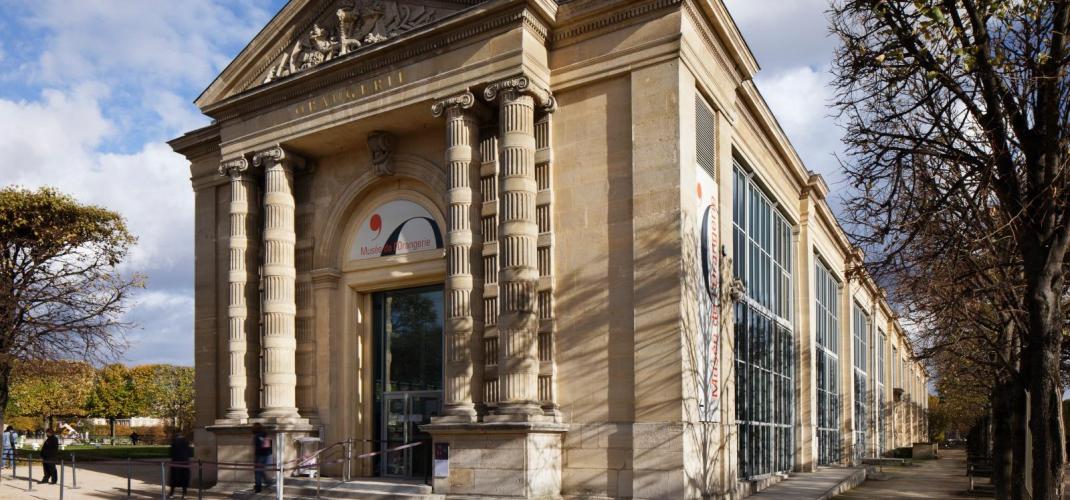
Musée de l’Orangerie exterior, Paris — photo by Homonihilis, CC BY-SA 3.0.
Monet: Painting Time — A Must-See Exhibition in Paris
From September 30, 2026 to January 25, 2027, the Musée de l’Orangerie celebrates Claude Monet with “Monet: Painting Time,” an exhibition exploring one of the artist’s lifelong obsessions: the passage of time, and the ever-changing nature of light.
For art lovers and curious travelers alike, this exhibition offers a wonderful opportunity to discover Monet from a different perspective — and to experience Paris through the eyes of one of its most celebrated painters.
Monet and the Art of Capturing a Moment
Claude Monet is one of the great figures of Impressionism. Throughout his career, he was fascinated by something seemingly impossible to capture: light as it changes from one moment to the next.
A single landscape could become the subject of several paintings, each one subtly different. Morning mist, changing skies, reflections on water, the seasons and shifting light constantly transformed the scene before his eyes.
This relationship between light, time and perception lies at the heart of “Monet: Painting Time” at the Musée de l’Orangerie.
Rather than simply painting a landscape, Monet sought to capture the fleeting impression of a particular moment — knowing that it would never quite return.
Nearly 40 Paintings Tracing the Passage of Time
The exhibition brings together nearly 40 paintings, drawn from major French collections and international loans.
Visitors can discover some of Monet’s celebrated series, including his Haystacks, Poplars, Rouen Cathedrals and Houses of Parliament in London.
At first glance, the paintings may depict the same subject. Look a little closer, however, and everything changes.
The colors shift. The atmosphere evolves. Shadows appear and disappear. A familiar landscape becomes something entirely new.
In these series, the subject itself almost becomes secondary. What Monet is truly painting is the passage of time.
From the Seine to the Water Lilies of Giverny
The exhibition follows Monet through different periods of his career, from his early Impressionist experiments to his later works.
His famous Water Lilies naturally hold a special place in this story.
At his home in Giverny, Monet created the Japanese-inspired garden and pond that would become one of the defining subjects of his later work. Water, flowers, reflections and sky gradually became intertwined, creating paintings in which the boundaries between landscape and abstraction begin to disappear.
The Musée de l’Orangerie is home to another extraordinary chapter of this story: Monet’s monumental Water Lilies murals, created especially for the museum.
Displayed in its distinctive oval rooms, the paintings surround visitors on every side, creating an experience that is less about simply looking at a painting and more about stepping inside Monet’s world.
A Perfect Way to Experience Paris
The Musée de l’Orangerie is located in the Jardin des Tuileries, just steps from Place de la Concorde and within easy reach of the Louvre and the Seine.
And this is perhaps one of the pleasures of discovering Monet in Paris: once you leave the museum, you can continue to look at the city through his eyes.
The light moving across the façades.
The reflections on the Seine.
The changing colors of the gardens.
The shadows stretching across the streets in the late afternoon.
Paris itself becomes a constantly changing landscape.
Discovering Monet from Saint-Germain-des-Prés
For guests staying in Saint-Germain-des-Prés, a visit to the Musée de l’Orangerie fits naturally into a day spent discovering the cultural and artistic heart of Paris.
Begin the morning with a stroll through the streets of Saint-Germain-des-Prés, perhaps stopping for coffee along the way. Explore the neighborhood’s galleries, bookstores and boutiques before continuing towards the Seine and the Tuileries Gardens.
A visit to the Musée de l’Orangerie can then become part of a wider Parisian experience — one that combines art, architecture, gardens and the simple pleasure of wandering through the city.
After the exhibition, take your time crossing the Tuileries or walking along the Seine before making your way back towards Saint-Germain-des-Prés.
There is no need to rush.
After all, Monet reminds us that sometimes the most beautiful part of Paris is simply taking the time to look.